


Intelligence Gathering
Most OSINT investigations start the same way. You open a few familiar tabs. Maybe a known breach search engine. A DNS lookup. A couple of social media queries. Within minutes, you're already working with the same tools everyone else uses.
And that's exactly the problem.
In open-source intelligence, the difference between surface-level findings and meaningful intelligence often comes down to the tools you use. While popular platforms get most of the attention, many investigators overlook a growing ecosystem of smaller, specialized tools that quietly solve very specific problems.
In this article, we'll explore 14 of such OSINT tools that deserve more attention.
Some are simple web interfaces. Some are powerful search engines. A few are command-line tools designed for deeper technical workflows. But all of them share one thing in common: They help investigators find signals that others miss.
Let's dive into the article with this quote —
"The real advantage in intelligence work isn't having more data — it's knowing where to look that others don't."
1. CyScan
CyScan is a lightweight URL scanning tool that helps you understand what a link does before you open it. It analyzes redirects, external connections, and background activity to give you a clearer picture of how a website behaves, instead of just marking it as safe or unsafe.
URL: cyscan.io
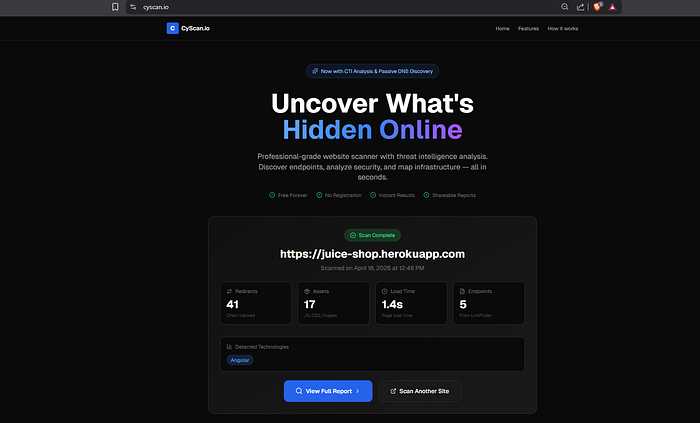
It also offers a detailed report option. See this for example (https://cyscan.io/s/rfh8ry)
It fits well into everyday workflows like checking suspicious links from emails, validating URLs shared in chats, or doing quick initial analysis during investigations.
2. Filmot
Filmot is a powerful search tool that lets users find specific keywords or phrases spoken within YouTube videos. Instead of manually scrubbing through long content, it indexes captions and transcripts to help you jump directly to relevant moments.

This makes it especially useful for researchers, investigators, and content analysts who need to locate information buried inside large video archives quickly. Whether you're verifying statements, tracking mentions, or analyzing content trends, Filmot significantly speeds up the process of extracting insights from video data.
3. Find Pic Location
FindPicLocation is an AI-powered tool that helps users determine where a photo was taken by analyzing visual elements within the image. By examining landmarks, architecture, terrain, signage, and other contextual clues, it attempts to pinpoint the location or suggest likely matches.
It's especially useful in cases where metadata, such as GPS, is missing or removed. Whether you're verifying the origin of an image, solving geolocation challenges, or simply curious about a photo's background, the tool offers a quick and intuitive way to extract location insights from visuals.
URL: FindPicLocation
Let's test the tool by giving it a photo of a sculpture from Oslo.
This tool accurately captured the sculpture's approximate location. It might not give you exact coordinates in the free version, but still, the information it gives is enough to boost your investigation. It is a valuable tool in scenarios where you are highly dependent upon environmental details such as road signs, vegetation, or building styles to trace the origin of an image or verify certain claims.
4. What's My Name
WhatsMyName is an online tool designed to help users discover where a specific username exists across hundreds of websites and platforms. By searching a single handle, it checks multiple social media sites, forums, and online services to identify potential matches.
This makes it especially useful for investigations, digital footprint analysis, or simply checking username availability. With a clean interface and quick results, it simplifies the process of tracking online identities without requiring manual searches across each platform.
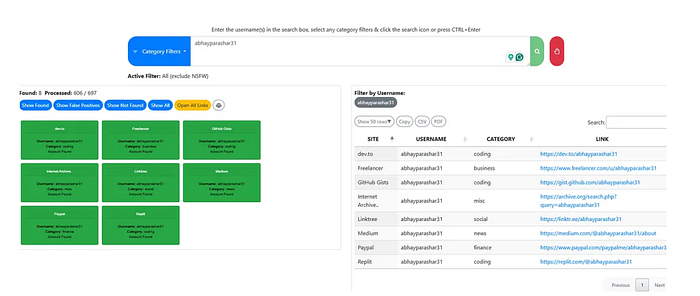
This tool might reveal some old Reddit posts, a GitHub repo, or an old forum account from ten years ago.
5. Recox
Recox is a web-based reconnaissance tool designed for bug bounty hunters and security researchers. It helps you collect subdomains and hidden endpoints of a target website using multiple passive data sources, without actively scanning or attacking the site. This makes it useful for mapping a target's attack surface safely and quickly.
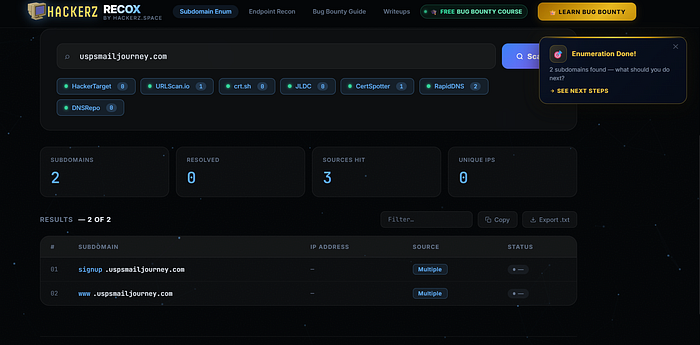
The tool also guides users on what to do after recon, making it beginner-friendly while still useful for experienced testers. Overall, it saves time by automating the early stages of security testing and organizing the results in one place.
6. Telegram Spoiler Decoder
This tool helps recover hidden spoiler text from Telegram messages that appear as unreadable pseudo-braille characters on the macOS Telegram client. This becomes especially useful during investigations or continuous monitoring of Telegram channels, groups, and threat actor communities where users often hide sensitive details under spoiler formatting — such as phishing links, leaked credentials, malware names, crypto wallet addresses, contact handles, or operational instructions.
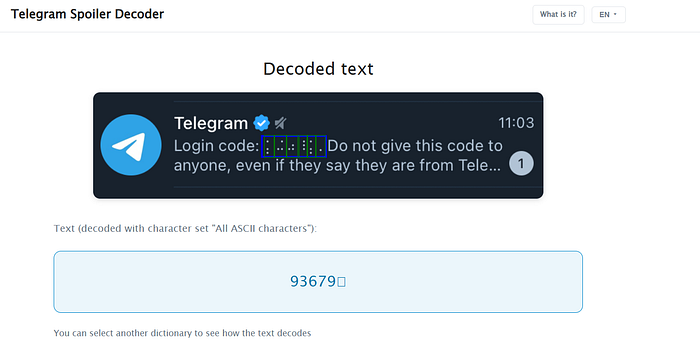
If an analyst only has a screenshot, a forwarded image, or a recorded screen session, this method can help recover the hidden information and preserve intelligence that would normally stay concealed.
7. Eyedex
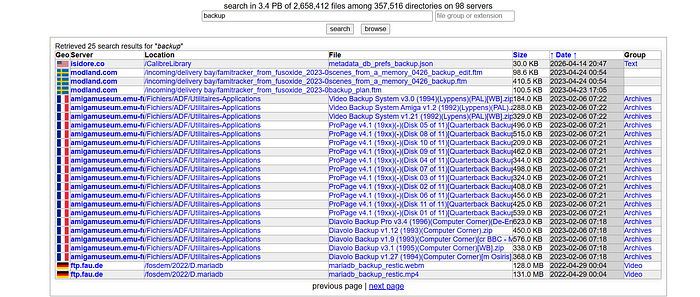
EyeDex is a massive public file search engine that helps users search through petabytes of openly accessible files stored across internet servers. The platform indexes millions of directories and documents from FTP servers, web servers, and other exposed storage locations, making it possible to quickly discover PDFs, text files, images, archives, configuration files, leaked documents, and many other publicly reachable resources from one search bar.
Instead of manually hunting through open directories, EyeDex allows investigators to instantly search for specific keywords, filenames, domains, email addresses, or sensitive documents hidden inside huge amounts of public data.
8. haveibeensquattəd
It is a domain monitoring tool that helps users check whether attackers have registered lookalike versions of their website domain for phishing, impersonation, or fraud. You simply enter your real domain, and the platform searches for typo-based copies, fake login domains, suspiciously similar spellings, and other malicious variations that could trick customers or employees.
It also provides extra details like hosting information, screenshots, DNS records, certificates, redirects, and risk classification to help understand whether the discovered domain is harmless or potentially dangerous. The platform is built specifically to catch typosquatting threats before they turn into security incidents.
9. OSINT Investigator's Toolkit
OSINT Intelligence On Chain is a browser-based investigation platform that combines traditional OSINT with blockchain tracing capabilities. It allows users to investigate wallet addresses, domains, usernames, emails, phone numbers, and other digital identifiers from one place, while also linking them to cryptocurrency activity when possible.
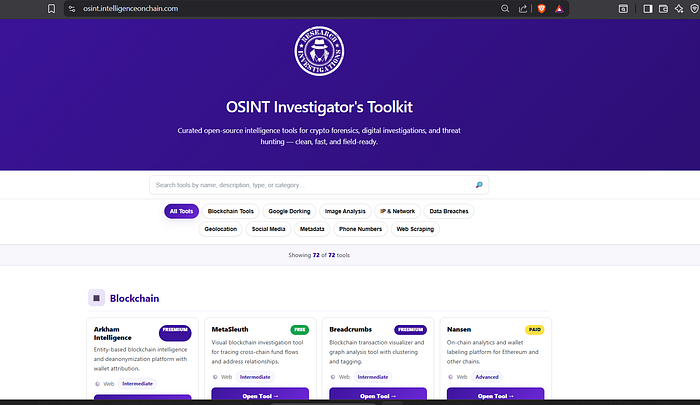
The platform is designed for researchers, fraud investigators, scam victims, and cyber analysts who need to follow both public internet footprints and on-chain transactions together. Instead of using separate tools for social media searches, domain recon, and wallet tracing, it brings multiple intelligence pivots into a single workflow for faster investigation.
10. Antipublic
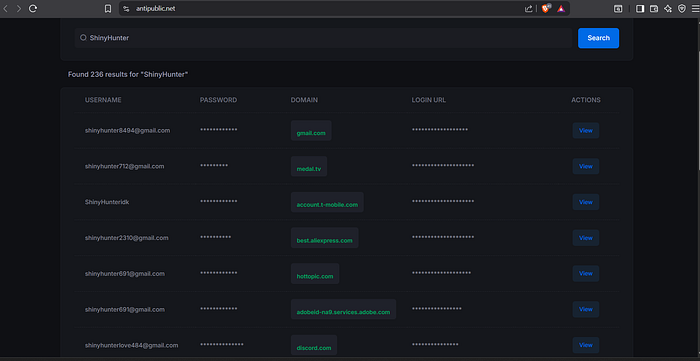
Antipublic is a leaked credential search platform that helps users check whether an email address, username, password, or company-related data has appeared in public breach collections. It is built around the well-known "Anti Public" style database — large lists of stolen login records gathered from past breaches — and makes this information searchable through a web interface. It's a perfect alternative to the haveibeenpwned site.
Site: antipublic.net
11. DNSDumpster
DNSDumpster is a free online DNS reconnaissance tool that helps users discover the publicly visible infrastructure connected to any domain. By entering a website name, it quickly pulls out subdomains, IP addresses, mail servers, name servers, DNS records, and related host information from public DNS data sources.
The platform also presents the results in an easy-to-read visual map, making it simple to understand how a target's external network is structured.
Instead of running multiple manual DNS queries, DNSDumpster collects everything into one quick passive lookup, which makes early-stage recon much faster.
Test it out yourself: DNSDumpster.com

12. Website informer
Website Informer is an online website intelligence tool that gives you a quick report about any domain on the internet. By entering a website name, users can view useful details such as WHOIS records, hosting provider, IP address, DNS servers, estimated traffic, related domains, safety reputation, and similar websites.
The platform gathers this information from multiple public web sources and shows it in one easy dashboard, saving users from doing separate manual lookups. It also offers browser-based instant checks while visiting websites.
This tool is very handy during domain investigations, suspicious website analysis, phishing verification, and competitor research. Analysts often use it when they need a fast first overview of an unknown website — who owns it, where it is hosted, what infrastructure it uses, whether similar domains exist, and how trustworthy it appears — before moving into deeper technical investigation.
13. Robin
Robin is an AI-powered dark web investigation tool built for OSINT researchers, threat intelligence teams, and cyber investigators who need to search hidden Tor-based sources faster. It automates the difficult parts of dark web recon by refining search queries, collecting results from multiple dark web search engines, scraping relevant pages through Tor, and then generating a readable intelligence summary using large language models.
The project supports both command-line and web interface usage, making it suitable for quick lookups as well as deeper investigative workflows. Its main goal is to reduce the huge amount of manual searching analysts normally do when monitoring darknet activity.
You can check out this video by the NetworkChunk YouTube channel on the Robin tool to get an idea of how it works and what capabilities it has.
14. ShareTrace
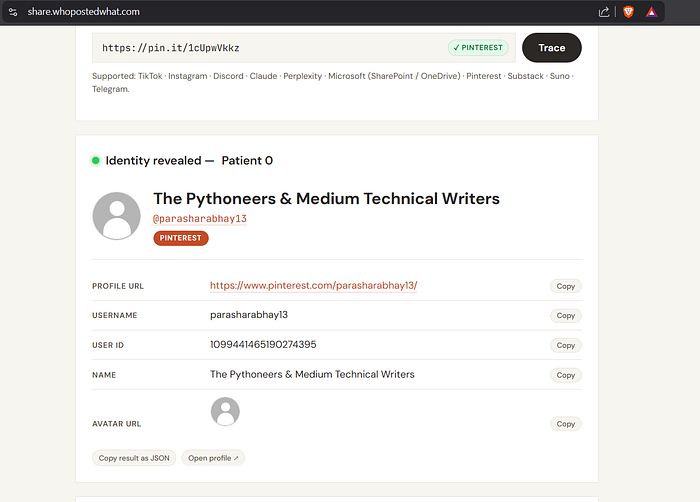
ShareTrace is a digital footprint-tracing tool that helps users investigate a person's online presence using identifiers such as username, email, or phone number. It scans multiple public platforms and open sources to identify where that identity appears, making it easier to connect social accounts, exposed records, and scattered online traces in a single search. Instead of manually checking every platform one by one, ShareTrace speeds up early-stage identity investigations by pulling public visibility data into a single interface.
Bonus Utility Tool: Searchall
Link: https://searchall.net/
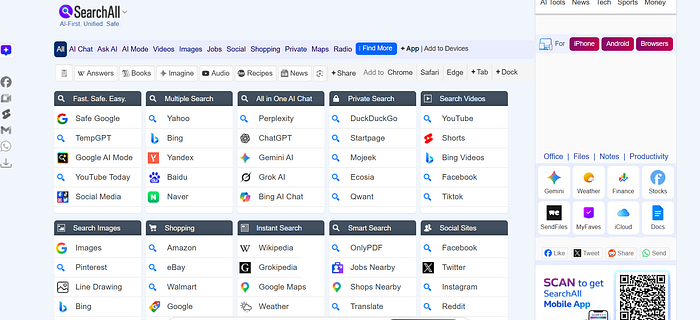
It is an all-in-one meta search platform that lets users search across multiple search engines, AI chatbots, videos, images, shopping sites, and social networks from a single keyword input. Instead of opening Google, Bing, YouTube, Reddit, or AI tools separately, it sends the same query across many platforms in one place, making broad online research much faster. It is commonly used as a quick starting point when users want to gather information from many public sources at once.

{ Signing Off — Abhay Parashar Follow Me: Medium Connect With ME: LinkedIn | My Email List }